Before cryptocurrency became mainstream, before billion-dollar exchange hacks were regular news, there was MtGox—and June 2011 marked the moment when the Bitcoin world learned just how vulnerable these new financial platforms could be.
The Attack: June 20, 2011
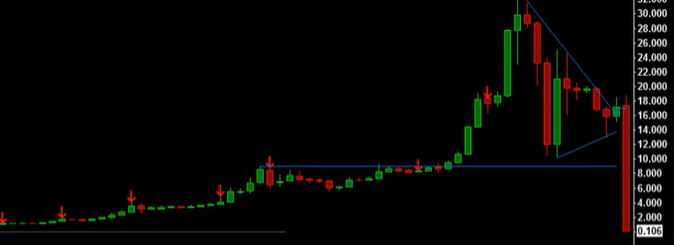
On that summer day, something unusual appeared on MtGox’s order book. Someone was flooding the exchange with massive sell orders—thousands of orders selling 0.01 BTC each at increasingly absurd prices. Within approximately two minutes, Bitcoin’s price crashed from $17 to $0.01.
This wasn’t a market panic or a sudden loss of confidence in Bitcoin. It was a calculated attack.
The Mechanism
The attacker had gained access to an administrator account at MtGox. This administrative access allowed them to manipulate the order book directly, creating artificial sell pressure that drove the price to essentially zero.
But the price manipulation wasn’t the goal—it was the mechanism.
MtGox had security protocols tied to Bitcoin’s exchange rate. These protocols limited how much Bitcoin could be withdrawn based on its dollar value. At $17 per Bitcoin, large withdrawals would trigger security flags. But at $0.01 per Bitcoin? The same amount of BTC represented far less dollar value, allowing larger quantities to slip through unnoticed.
During the roughly 30 minutes of chaos, the attacker withdrew approximately 2,000 BTC—worth about $34,000 at pre-crash prices. Some estimates suggest the actual theft was significantly larger, but the exact figure remains disputed.
The Secondary Breach
The hack didn’t stop at stolen Bitcoin.
In the aftermath, user databases were leaked publicly. These databases contained login credentials with passwords encoded using MD5—a hashing algorithm that was already considered weak by 2011 standards. Many passwords could be decoded trivially.
This database leak exposed tens of thousands of user email addresses. Within days, affected users began receiving spam campaigns, including referral schemes from competing exchanges promising better security and rates. It was a bitter irony—marketing capitalizing on a security disaster.
MtGox’s Response
To their credit, MtGox covered the losses from company funds. Users who lost Bitcoin during the attack were reimbursed. The exchange rolled back trades that occurred during the manipulation window, restoring balances to their pre-attack state.
But the damage to trust was done.
Why This Mattered
The 2011 hack was, in dollar terms, relatively modest—especially compared to what would come later. But it established several uncomfortable truths about cryptocurrency exchanges:
Security Was an Afterthought
MtGox wasn’t built to be a financial institution. It had started life as a trading card exchange (the name stands for “Magic: The Gathering Online eXchange”). Its security infrastructure reflected those humble origins rather than the responsibilities of handling millions of dollars in digital assets.
Centralization Created Risk
Bitcoin was designed to be decentralized, but trading it required centralized exchanges. Those exchanges became single points of failure—if MtGox was compromised, so was every Bitcoin stored there.
User Data Was Valuable
The leaked email database showed that attackers weren’t just interested in Bitcoin. The personal information of cryptocurrency users had value too, whether for targeted phishing, spam, or identifying wealthy individuals for future attacks.
The Foreshadowing
The 2011 hack was, as it turned out, just the first nail in MtGox’s coffin.
The exchange would limp along for three more years, accumulating security problems that went undetected—or at least unreported. When MtGox finally collapsed in February 2014, it revealed that 850,000 Bitcoin had gone missing (though 200,000 were later found). At the time, that represented approximately $450 million. At today’s prices, it would be worth tens of billions.
The seeds of that catastrophic collapse were planted in the same lax security culture that enabled the 2011 hack.
Lessons for Today
The MtGox hack offers lessons that remain relevant:
Don’t Store What You’re Not Trading
If you’re holding cryptocurrency as an investment rather than actively trading, it shouldn’t sit on an exchange. Hardware wallets and self-custody solutions didn’t exist in user-friendly forms in 2011, but they do now.
Exchange Security Has Improved—But Isn’t Perfect
Modern exchanges use cold storage for the majority of funds, multi-signature transactions, proof of reserves, and regular security audits. But hacks still happen. FTX, Celsius, and other failures have shown that centralization risk hasn’t been eliminated.
The Crypto Ecosystem Was—and Is—Maturing
The industry’s response to MtGox accelerated the development of better security practices, regulatory frameworks, and user protections. That maturation continues, but it’s worth remembering how recently this was all truly the Wild West.
The Aftermath
MtGox’s bankruptcy proceedings have stretched for over a decade. As of 2024, trustees have begun distributing recovered Bitcoin to creditors. Due to Bitcoin’s dramatic price appreciation since 2014, some creditors will receive substantial returns despite losing a percentage of their original holdings.
It’s an strange coda to a saga that began with a gaming card exchange, evolved into the world’s largest Bitcoin trading platform, and collapsed in spectacular fashion—with that first 2011 hack serving as an early warning that went largely unheeded.